We try and answer any questions you may have to find your right product.
Corporate or Wholesale Accounts
We provide tailored services and establish customized relationships for businesses, schools, and government agencies. If you have inquiries regarding bulk discounts or wholesale pricing please reach out to us
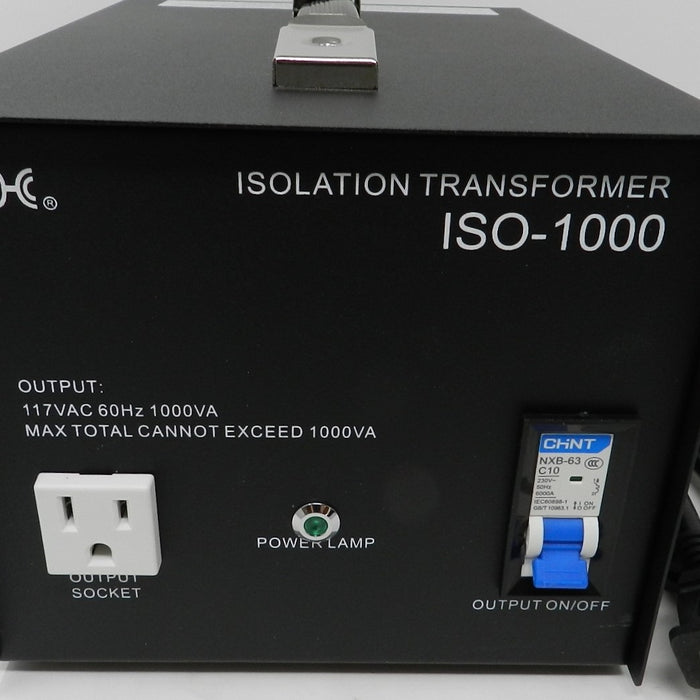
An isolation transformer can help reduce RF power noise in an electrical system. An isolation transformer is designed to provide electrical isolation between the input and output circuits, typically by using a transformer with a 1:1 ratio. This isolation helps...
Excellent Accuracy (See Review) + Isolation + Build Quality + Price / Value
This unit has, thus far, exceeded expectations. It's very well built, definitely "beefy" (at 19.5 Lbs. [including power cord]), handsomely 'packaged,' and of isolated construction - all at a commendably fair price.
Initial impressions were, well, pretty amazing: The unit was cocooned inside not one, not two, but *three* double-wall-thick-cardboard cartons + foam protective blocks on the inside-most container. Needless to relate, it turned out to be not only functionally impressive, but also cosmetically perfect. I have never seen a piece of electronic equipment packaged this well.
It is electrically quiet, with very little electrical noise / ripple - and as an isolation transformer, considerably safer to operate than the (albeit cheaper) competition.
To be even approximately accurate, the unit's AC voltage dial assumes an input line voltage of 117VAC. My home's voltage is a little over 125 VAC - and remained quite stable as measured while I conducted several tests of accuracy and linearity as I advanced the dial in 10 volt increments up to the max dial reading of 130 VAC.
Running the unit with input voltages anywhere in the range of, say, 110 to 130 VAC is all fine, of course, but in an effort to gauge the approximate accuracy of the dial reading vs. actual measured voltage, I 'derated' the measured output voltage readings by a 125-to- 117 ratio to better accord with the manufacturer's nominal / expected input voltage.
I measured the OCV two ways: (1) via the little digital panel meter supplied on the face of the unit, and (2) with my trusty Fluke 87V VOM. Here is what I observed, as a percentage above or below the "dial-indicated" voltage - as measured by these two methods (again, "corrected" for the difference between the supplied [125] and manufacturer-specified [117] input voltages):
Setting the dial voltage was done as carefully as I could manage, even inscribing a thin white line on the outer rim of the dial to assisting me in lining up the pointer with the indicated voltage - but no claim to absolute perfection is intended.
The messages here are pretty clear:
1. Without derating or uprating your own situation's supply voltage to the manufacturer's 117 VAC input voltage, you will be misled if you rely only on the dial setting. Don't even think of doing that unless you miraculously find you have exactly 117 V.
2. The little digital panel meter (in my example unit) is 'off' by 6 - 12% at 30v dial readings and below (even if you do 'correct' your supply V to 117V - improving to ~ 2 - 5% accuracy error above 30V dial-indicated voltage.
3. If all you are looking for is 'reasonably close,' you can make in-your-head suitable corrections and go with those. Or, best of all:
3.After all of the discussion above, if you want accuracy, just get out your quality digital VOM, plug the probes into one of the two outlets - and set your voltage in that way.
The good news is that output behavior is all quite linear, with no visible 'jumps' or 'dips' as the dial is advanced.
Also pay attention to the manufacturer's more detailed ratings (which, truthfully, could have / should have appeared in the initial / online description) - regarding necessary reductions in output wattage (VA) loads at which the unit can be safely operated when extended operation is contemplated at higher loads.
All in all: a solid unit - great addition to the bench - very pleased.
This power supply does exactly what it’s supposed to do. It provides a stable 12V AC output and has been working reliably with my equipment without any noise, heat issues, or voltage instability.
The connector fits securely, and the unit feels solid and well-built. No hum, no interference, and no surprises—which is exactly what you want from a power supply.
It’s refreshing to find a straightforward, dependable AC-AC adapter without unnecessary complexity. I would buy it again if I needed another.
The device appears to be solid and well built. It's the only unit I've found that has both a Variac AND an Isolation transformer in one unit. It's roughly half the price of buying both units separately (not to mention the reclaimed workspace). As near as I can tell, the output is indeed isolated from the input, as claimed, including the ground. I'm just a hobbyist, not an electrical engineer, so please accept my opinion in that that context.
Old Guy Hifi sent me after I researched about linear power supplies on YouTube. I have it powering my Dac. I reccomend highly 👍
AC-DC Linear Power Supply 12V DC @ 1200mA; 2.5 x 5.5mm (+) center polarity
Marcia Kern
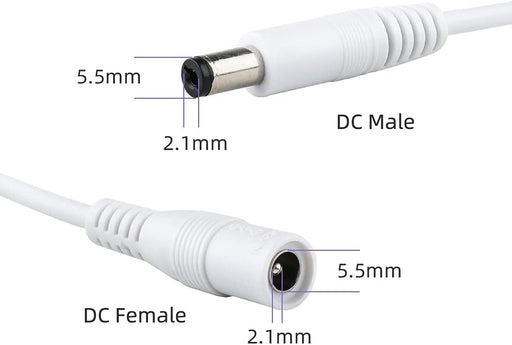
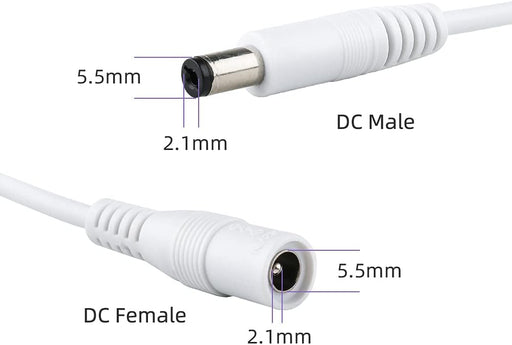
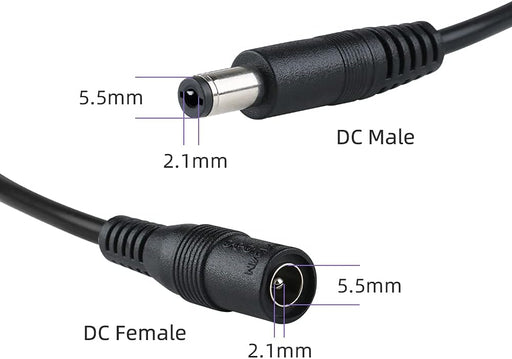
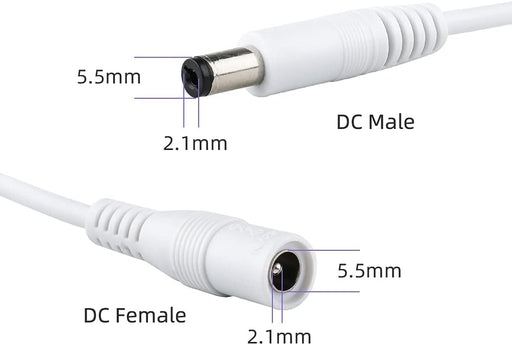
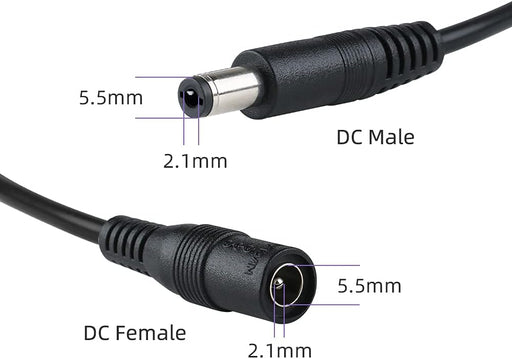
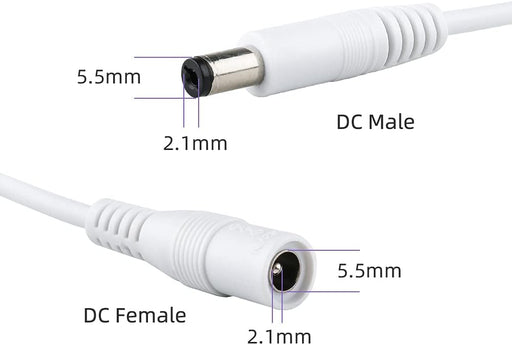
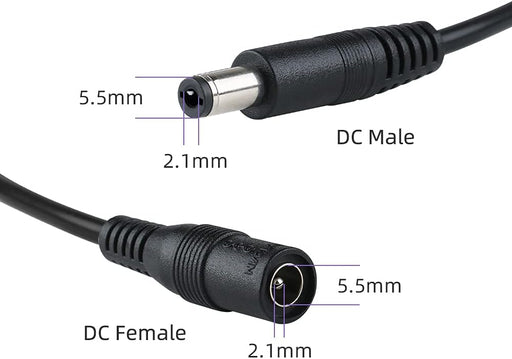
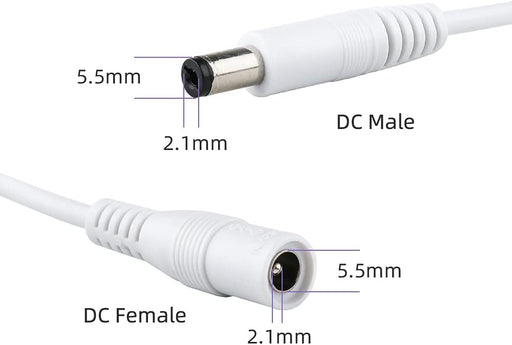
12V AC @ 1000mA Power Supply 2.1 x 5.5mm
I purchased this for my fiber optic Hummingbird lamp because it has a color wheel synchrous motor in which requires the above power adapter. This company is the only company I found that carries these adapters. I bought one, and now have bought 2 more, one for my sister who has the same lamp and another for me, because I recently purchased another fiber optic lamp. Hans was very helpful and I truly appreciate the help he provided. Thank you Hans!
AC-AC Power Supply 12V AC @ 1000mA; 2.1 x 5.5mm
Stephen Ring
Works for non-standard audio effects
Most guitar pedals and effects boxes are standard 9V center negative DC, but my Alesis Phlngr actually needs 9V AC. I had to find the right plug size which ended up being 2.5 mm inner diameter instead of 2.1mm like this adapter. This site also sells the converter from 2.1x5.5 mm to 2.5x5.5 mm that allows me to interface with this unit. Works as intended.
AC-AC Power Supply 9V AC @ 1110mA; 2.1 x 5.5mm
Stephen Ring
Replacement for BOSS SE-50 Supply
I bought this adapter for my Boss SE-50 since I did not want to spend $40+ on a giant brick known as the BRB-120. I had one of the original Roland power supplies back in the day and hated how much space it took up just for a half-1U rackmount. However the plug on the AC/AC adapter I bought here is 2.1mm x 5.5mm so I also got a converter on this website to adapt it to the 3.0mm x 6.3mm plug in the back of the SE-50. I have confirmed this to be operational, and a less expensive shoehorn for the BRB-120.
AC-AC Power Supply 12V AC @ 1000mA; 2.1 x 5.5mm
Stephen Ferris
Excellent Accuracy (See Review) + Isolation + Build Quality + Price / Value
This unit has, thus far, exceeded expectations. It's very well built, definitely "beefy" (at 19.5 Lbs. [including power cord]), handsomely 'packaged,' and of isolated construction - all at a commendably fair price.
Initial impressions were, well, pretty amazing: The unit was cocooned inside not one, not two, but *three* double-wall-thick-cardboard cartons + foam protective blocks on the inside-most container. Needless to relate, it turned out to be not only functionally impressive, but also cosmetically perfect. I have never seen a piece of electronic equipment packaged this well.
It is electrically quiet, with very little electrical noise / ripple - and as an isolation transformer, considerably safer to operate than the (albeit cheaper) competition.
To be even approximately accurate, the unit's AC voltage dial assumes an input line voltage of 117VAC. My home's voltage is a little over 125 VAC - and remained quite stable as measured while I conducted several tests of accuracy and linearity as I advanced the dial in 10 volt increments up to the max dial reading of 130 VAC.
Running the unit with input voltages anywhere in the range of, say, 110 to 130 VAC is all fine, of course, but in an effort to gauge the approximate accuracy of the dial reading vs. actual measured voltage, I 'derated' the measured output voltage readings by a 125-to- 117 ratio to better accord with the manufacturer's nominal / expected input voltage.
I measured the OCV two ways: (1) via the little digital panel meter supplied on the face of the unit, and (2) with my trusty Fluke 87V VOM. Here is what I observed, as a percentage above or below the "dial-indicated" voltage - as measured by these two methods (again, "corrected" for the difference between the supplied [125] and manufacturer-specified [117] input voltages):
Setting the dial voltage was done as carefully as I could manage, even inscribing a thin white line on the outer rim of the dial to assisting me in lining up the pointer with the indicated voltage - but no claim to absolute perfection is intended.
The messages here are pretty clear:
1. Without derating or uprating your own situation's supply voltage to the manufacturer's 117 VAC input voltage, you will be misled if you rely only on the dial setting. Don't even think of doing that unless you miraculously find you have exactly 117 V.
2. The little digital panel meter (in my example unit) is 'off' by 6 - 12% at 30v dial readings and below (even if you do 'correct' your supply V to 117V - improving to ~ 2 - 5% accuracy error above 30V dial-indicated voltage.
3. If all you are looking for is 'reasonably close,' you can make in-your-head suitable corrections and go with those. Or, best of all:
3.After all of the discussion above, if you want accuracy, just get out your quality digital VOM, plug the probes into one of the two outlets - and set your voltage in that way.
The good news is that output behavior is all quite linear, with no visible 'jumps' or 'dips' as the dial is advanced.
Also pay attention to the manufacturer's more detailed ratings (which, truthfully, could have / should have appeared in the initial / online description) - regarding necessary reductions in output wattage (VA) loads at which the unit can be safely operated when extended operation is contemplated at higher loads.
All in all: a solid unit - great addition to the bench - very pleased.
Variable Transformer 10 Amp (1000 Watts); 0~130VAC Output ISOLATION & LCD Volt Meter
Excellent Accuracy (See Review) + Isolation + Build Quality + Price / Value
This unit has, thus far, exceeded expectations. It's very well built, definitely "beefy" (at 19.5 Lbs. [including power cord]), handsomely 'packaged,' and of isolated construction - all at a commendably fair price.
Initial impressions were, well, pretty amazing: The unit was cocooned inside not one, not two, but *three* double-wall-thick-cardboard cartons + foam protective blocks on the inside-most container. Needless to relate, it turned out to be not only functionally impressive, but also cosmetically perfect. I have never seen a piece of electronic equipment packaged this well.
It is electrically quiet, with very little electrical noise / ripple - and as an isolation transformer, considerably safer to operate than the (albeit cheaper) competition.
To be even approximately accurate, the unit's AC voltage dial assumes an input line voltage of 117VAC. My home's voltage is a little over 125 VAC - and remained quite stable as measured while I conducted several tests of accuracy and linearity as I advanced the dial in 10 volt increments up to the max dial reading of 130 VAC.
Running the unit with input voltages anywhere in the range of, say, 110 to 130 VAC is all fine, of course, but in an effort to gauge the approximate accuracy of the dial reading vs. actual measured voltage, I 'derated' the measured output voltage readings by a 125-to- 117 ratio to better accord with the manufacturer's nominal / expected input voltage.
I measured the OCV two ways: (1) via the little digital panel meter supplied on the face of the unit, and (2) with my trusty Fluke 87V VOM. Here is what I observed, as a percentage above or below the "dial-indicated" voltage - as measured by these two methods (again, "corrected" for the difference between the supplied [125] and manufacturer-specified [117] input voltages):
Setting the dial voltage was done as carefully as I could manage, even inscribing a thin white line on the outer rim of the dial to assisting me in lining up the pointer with the indicated voltage - but no claim to absolute perfection is intended.
The messages here are pretty clear:
1. Without derating or uprating your own situation's supply voltage to the manufacturer's 117 VAC input voltage, you will be misled if you rely only on the dial setting. Don't even think of doing that unless you miraculously find you have exactly 117 V.
2. The little digital panel meter (in my example unit) is 'off' by 6 - 12% at 30v dial readings and below (even if you do 'correct' your supply V to 117V - improving to ~ 2 - 5% accuracy error above 30V dial-indicated voltage.
3. If all you are looking for is 'reasonably close,' you can make in-your-head suitable corrections and go with those. Or, best of all:
3.After all of the discussion above, if you want accuracy, just get out your quality digital VOM, plug the probes into one of the two outlets - and set your voltage in that way.
The good news is that output behavior is all quite linear, with no visible 'jumps' or 'dips' as the dial is advanced.
Also pay attention to the manufacturer's more detailed ratings (which, truthfully, could have / should have appeared in the initial / online description) - regarding necessary reductions in output wattage (VA) loads at which the unit can be safely operated when extended operation is contemplated at higher loads.
All in all: a solid unit - great addition to the bench - very pleased.
This power supply does exactly what it’s supposed to do. It provides a stable 12V AC output and has been working reliably with my equipment without any noise, heat issues, or voltage instability.
The connector fits securely, and the unit feels solid and well-built. No hum, no interference, and no surprises—which is exactly what you want from a power supply.
It’s refreshing to find a straightforward, dependable AC-AC adapter without unnecessary complexity. I would buy it again if I needed another.